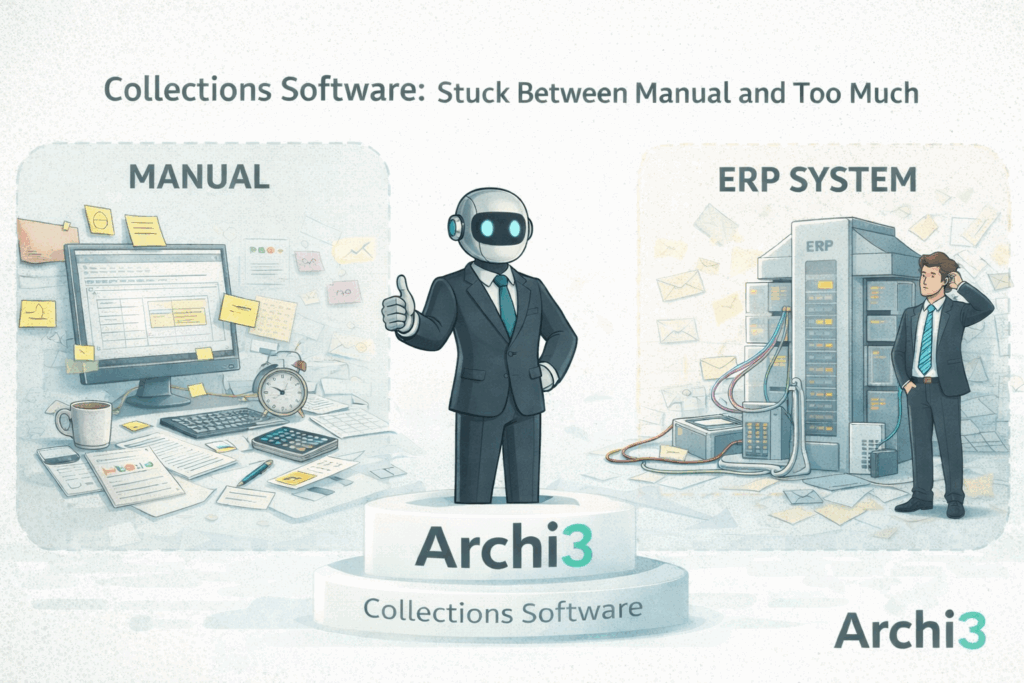
Most B2B companies handle collections one of two ways. They do it manually, or they buy collections software built into a massive ERP system they don’t need.
Both options have problems. As a result, most companies are stuck between them.
The Manual Side
On one end, you have spreadsheets, aging reports, and email. Someone pulls the aging, reviews it, and sends follow-ups manually.
This works when the team has time. However, it breaks when they don’t.
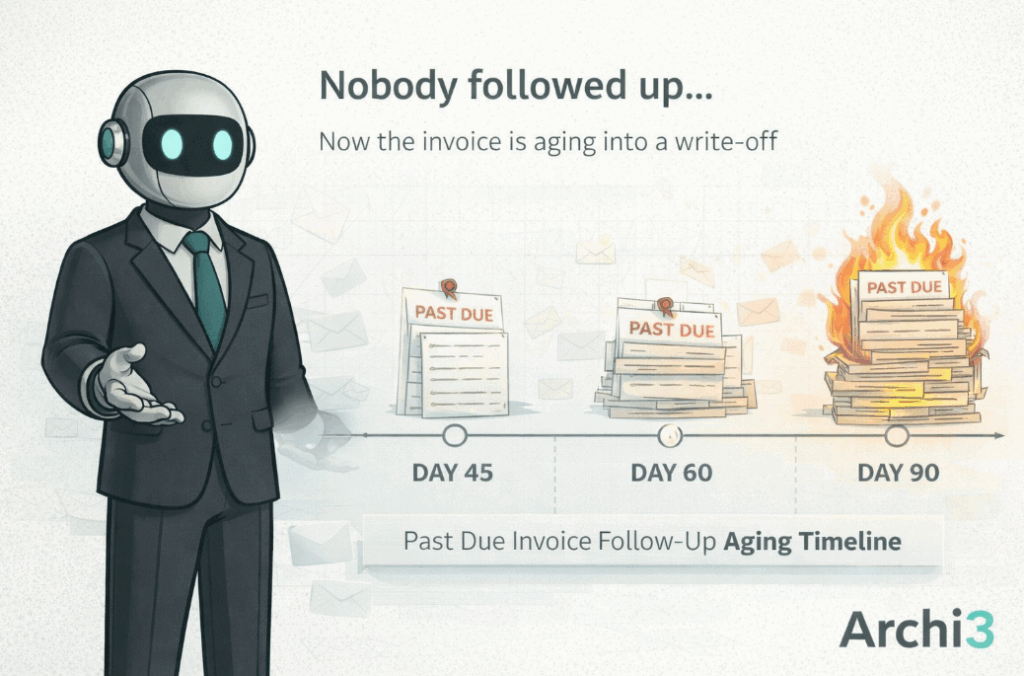
Follow-up slips. Invoices age. The process depends entirely on someone having bandwidth. So when the team gets busy, the routine work gets sacrificed.
Most B2B companies start here. Unfortunately, many stay here longer than they should.
The Big ERP Side
On the other end, you have collections software built into enterprise ERP systems. SAP. Oracle. NetSuite modules.
These platforms are powerful. But they’re also expensive, complex, and built for large organizations with dedicated IT teams.
For a mid-market B2B company, the ERP collections module is overkill. The implementation takes months. Furthermore, the cost is significant and the complexity requires resources most finance teams don’t have.
According to industry research, many companies struggle to fully implement and use the collections features inside their ERP. In other words, the software is there but nobody’s using it effectively.
The Gap in the Middle
Most B2B companies don’t need a spreadsheet and they don’t need an ERP module.
Instead, they need something in the middle. Collections software that actually runs the follow-up process without the complexity, cost, and implementation headaches of enterprise software.
It works with whatever system they already have. It’s live in days, not months. And their finance team can actually use it without IT support.
That gap is where most companies are stuck. Too busy for manual. Too lean for ERP.
What the Middle Looks Like
The middle is a collections process that runs every day based on aging. Follow-ups go out automatically. Replies get routed to your team. As a result, escalation happens based on rules, not memory.
There’s no massive implementation and no ERP integration required. Your team doesn’t need dedicated IT resources either.
Instead, it’s just a process that works your aging every day whether or not someone remembered to open the spreadsheet.
How Archi3 Fills the Gap
This is why we built Archi3. Archi3 is a B2B collections platform that sits between manual and ERP.
It runs your follow-up process every day based on aging. Specifically, it sends emails at the right intervals, monitors replies, and routes them to your team. It also escalates when invoices hit certain thresholds.
Because of this, there’s no ERP integration required and no complex implementation. Most teams are live in 4-5 days.
Your finance team keeps using whatever system they already have. Meanwhile, Archi3 handles the follow-up process that’s been falling through the cracks.
You don’t need to choose between a spreadsheet and a six-figure ERP module. You just need collections software that runs the process.
Apply for a free pilot and see what the middle looks like.